
I'm Trying to Make Book Reports a Thing
Who do I tell? What do I tell them?

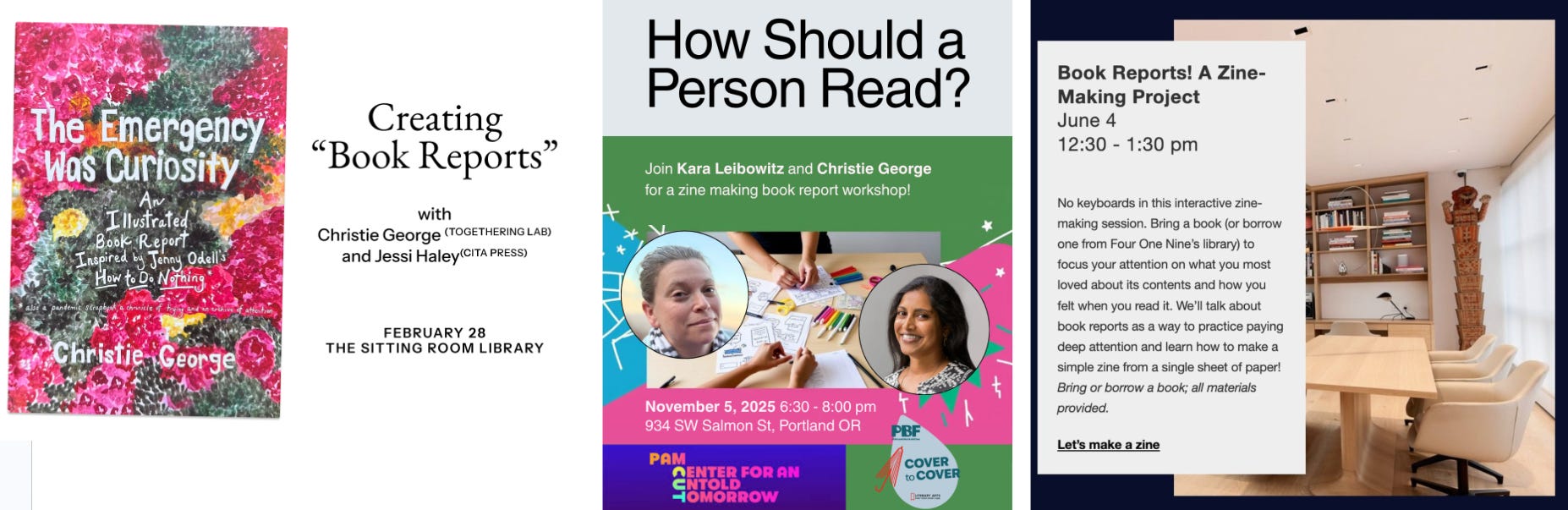
I did my first book report workshop of the year back in February at The Sitting Room in collaboration with Jessi Haley of Cita Press, a feminist indie press which publishes open access books written by women. The idea for this round table was for participants to start digging into their own version of a book report and enter into a direct conversation with an author or artist from the Sitting Room’s collection.
We’re just making book reports, but there are bigger issues at stake. The Sitting Room was established more than forty years ago as a place to celebrate the cultural contributions of women writers and artists who were often overlooked in their own lifetimes. Our book report round table was a way of encouraging people to create their own archives/records of thought in real time, to stop future gaps from forming.
I’ve been experimenting with language (insistent archives, pre-visionist history - a record that is correct before anyone has to revise it) to try to capture more succinctly why I think this stuff is important. In the process, I have become passionate about the potential of book reports as a form, and the promise of fan nonfiction as a genre. One of my goals is to make both of them — book reports and fan nonfiction — “a thing.” But how do I go about doing that? Who should I tell? What should I tell them?
Here’s what’s happened so far:
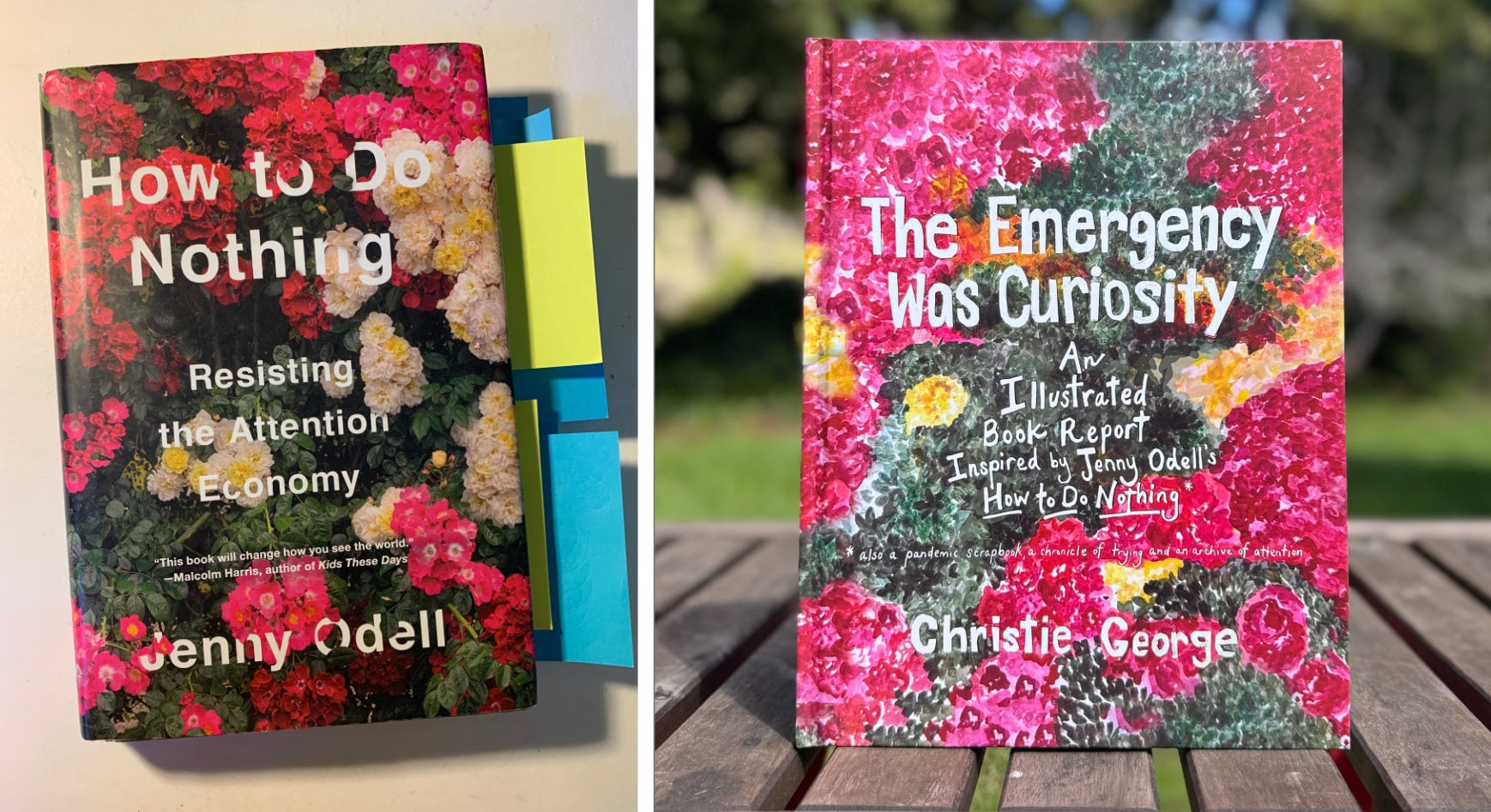
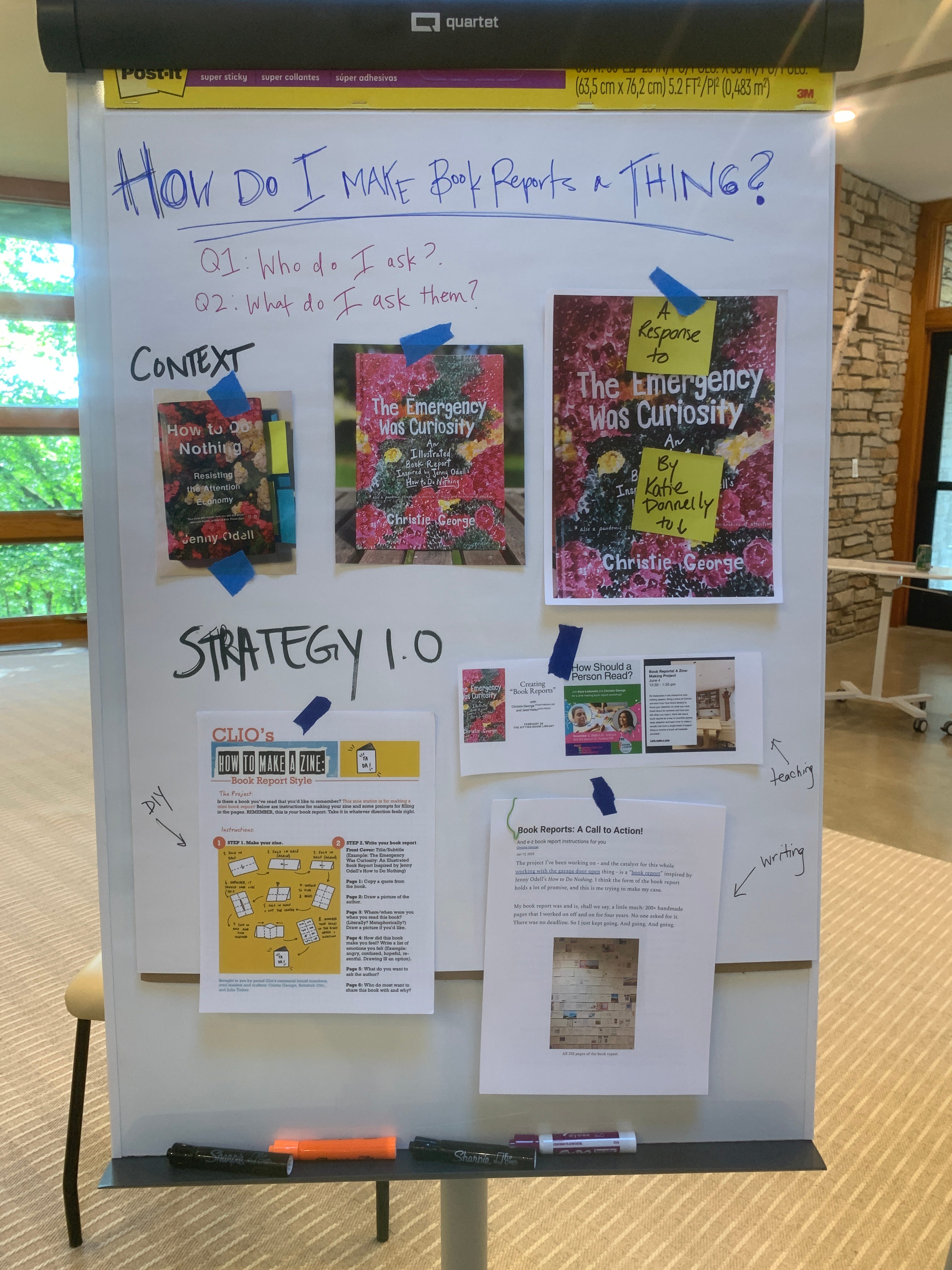
First, I made an illustrated book report inspired by Jenny Odell’s How to Do Nothing.
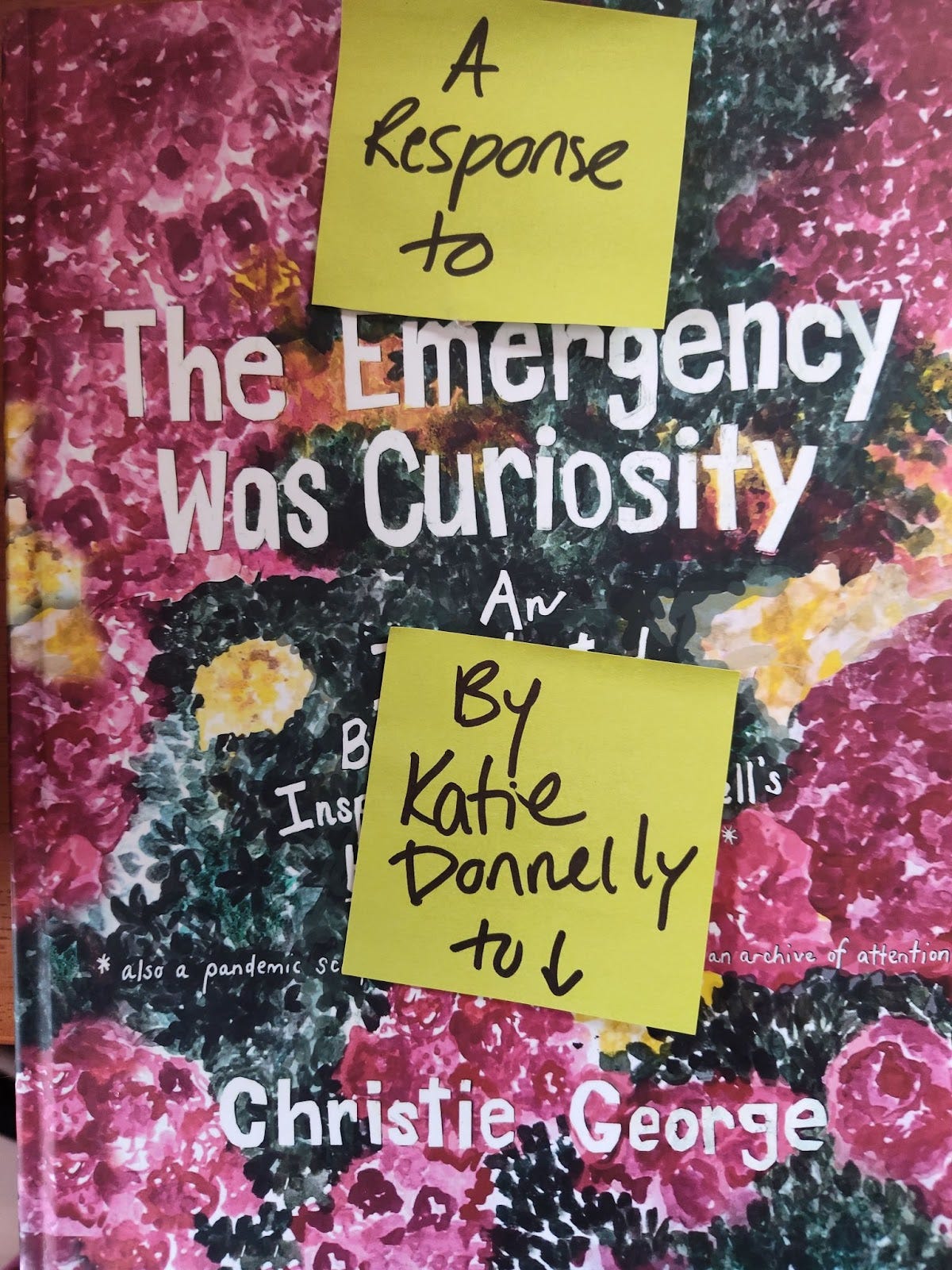
My friends started making book reports, too. Check out this one below from Katie. And this one from Caroline.
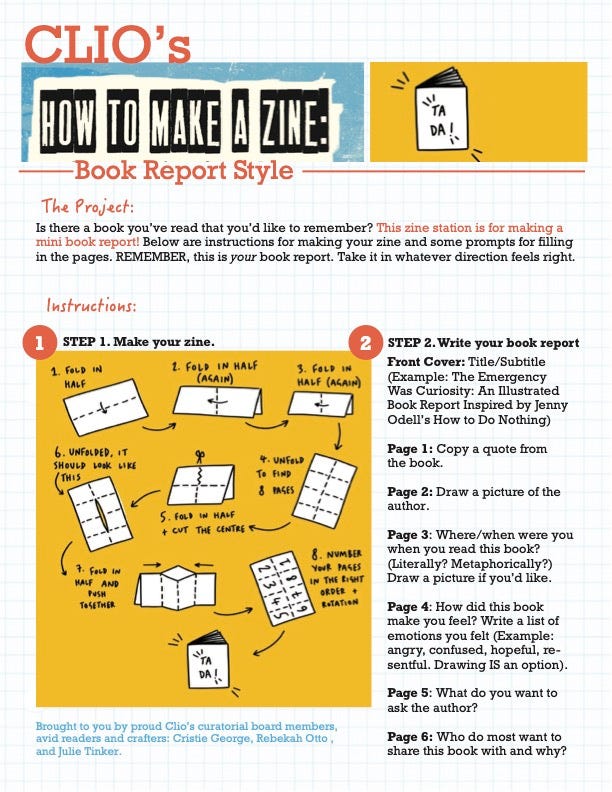
I wrote about book reports and why I think they’re important and included a set of instructions so that people could make their own.
I’ve hosted workshops at book and book-adjacent conferences and festivals.
My “Strategy”
I feel pretty good about my efforts so far, but I think I need to think bigger. On my desk is a Post-it note that outlines my current strategy. Make Book Reports a Thing: 1. Dua Lipa 2. New York Times 3. BookTok?
Of all of these, I actually think the Dua Lipa Strategy may be the one with the most promise1 and alignment2 and, at the very least, the most fun to pursue. But I probably need a more realistic plan.
Encourage Others to Make Book Reports
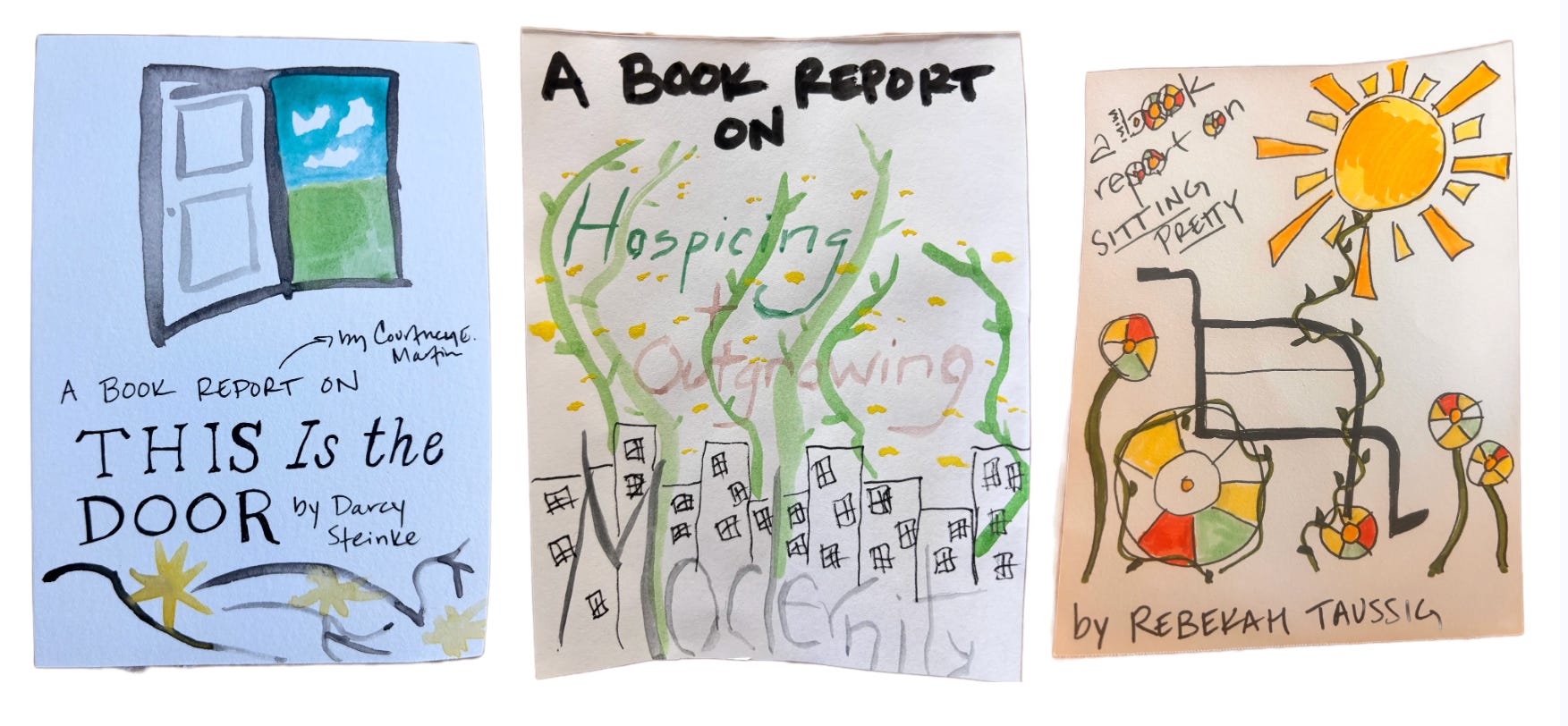
My pal Courtney Martin has been the most prolific and consistent of book report makers in my life.
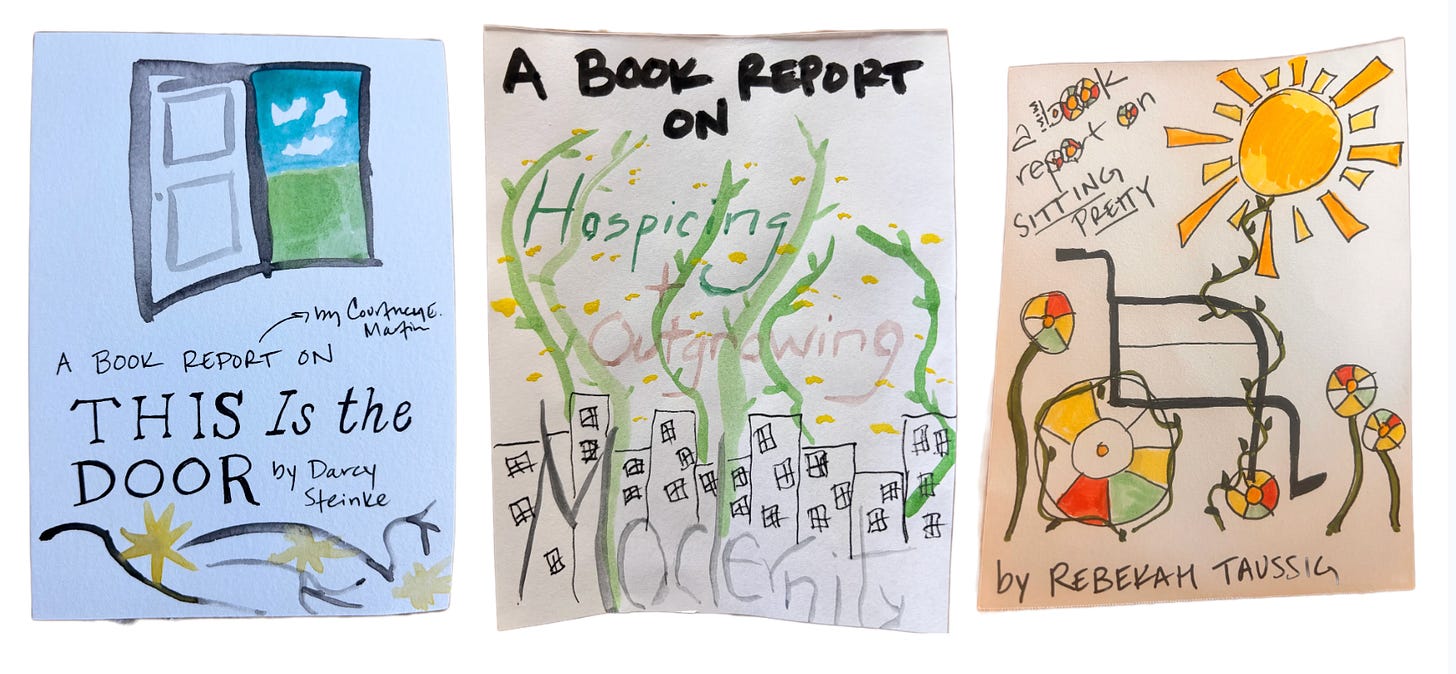
Courtney’s reports on This is the Door, Hospicing Modernity and Sitting Pretty
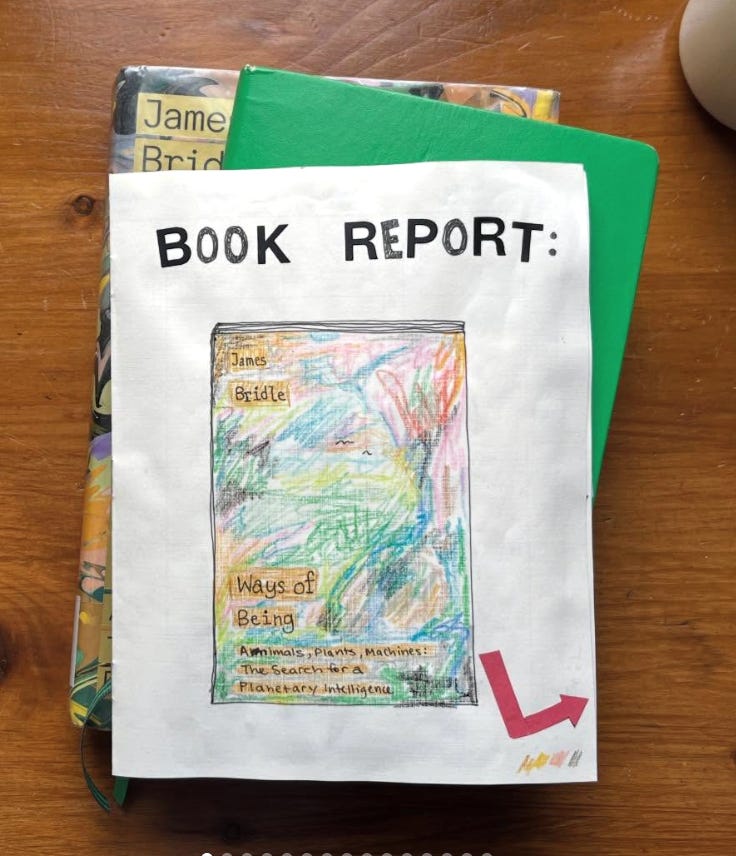
People I don’t know have started making book reports, like this one from Emma Werowinski on James Bridle’s Ways of Being
Collective Book Reports
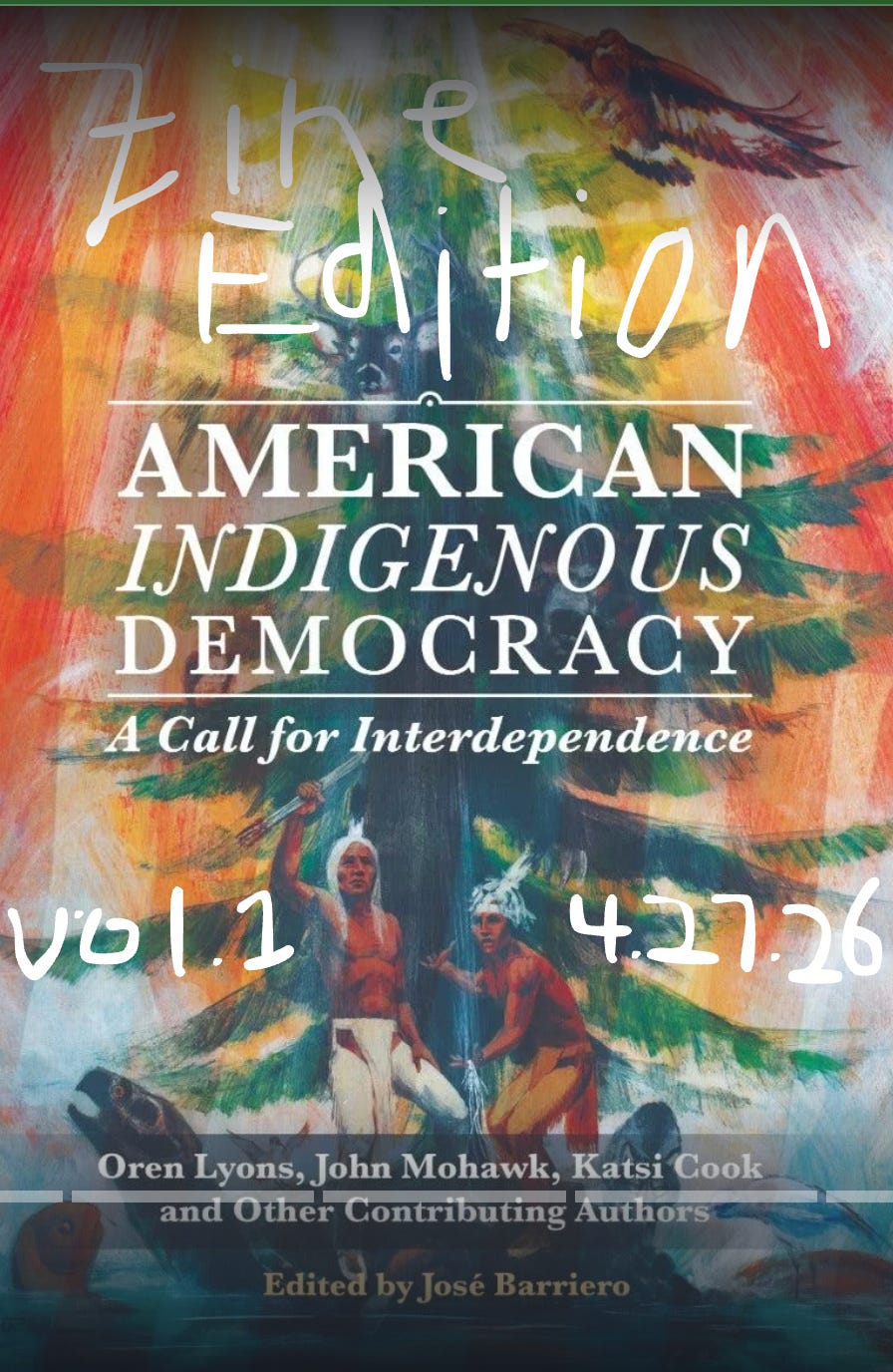
A group of devoted readers made a collective book report in response to American Indigenous Democracy: A Call for Interdependence. As MCK observes, it was an opportunity to “individually get to create something that can also lead to something we also collectively created.” I think there’s a lot of potential here.
What’s My Goal
At least part of what I’m still trying to work out is what the goal is. “Make book reports a thing” is a little vague, but it’s also the most sincere thing I can come up with. It’s also difficult to measure. How will I know if I’ve succeeded?
What I can say is that creating and receiving book reports has completely changed how I read and the scope of my attention. It's a more reciprocal way of engaging with text and a more intimate way of engaging with other people. I want more of it. I'm just not sure how to get there.
I’m happy to share one concrete thing is already happening:
A LIFE OF THEIR OWN: A symposium on books, what we make of them, and what they make of us
I’ll be co-hosting a symposium (ALOTO!) about book reports on October 18 at Problem Library in San Francisco in collaboration with Daniel Lucas of The School of Other Fields and Christina Pappas of Same Page SF during National Book Month.
Open Questions/Current Thinking
Maybe I should reach out to a publisher to see if there is an upcoming release that might benefit from a book report “campaign”. Lots of people making book reports about the same book as a way to cultivate engagement with the text.
I don’t really know much about how PR works in 2026. I’ve tried pitching a story to a few outlets that care about reading, but haven’t gotten any bites so far. Maybe I can find someone else to write about book reports and fan nonfiction. Is this where a publicist could help?
I’ll continue to futz around with this quest through the end of this year. By practicing in public on these ideas, I’m hoping I might find some direction, co-conspirators. Do you know someone who might want to write about book reports, fan nonfiction and more collective forms of reading and writing? Do you have a book and want people to make book reports about it? Are you BFFs with Dua Lipa? Get in touch.
Is Dua Lipa the best literary interviewer? in The Guardian
Hey Christie, not to write a novel underneath your Substack post or anything, but I'm very much interested your whole concept of fan nonfiction/book reports! I think engaging deeply, personally, and publicly with books that matter to us is one of the best means we have of pushing back against the growing culture of apathy or "post-literacy" (idk if you read that piece in The Atlantic yesterday about "the end of reading," but finding this newsletter in my inbox today was a balm after having made my way through that lol—so thank you). My hopeful take is that whole new genres and movements will evolve out of our changing relationship to books and art, and what you're working on feels like just one example.
I've worked in books for about a decade now and to be honest, I don't know if *anybody* really knows how PR works at this particular moment in time—we've entered a very decentralized era where more books are being published than ever, but a lot of reliable outlets for coverage have been lost, and/or just don't have the impact they used to in the current attention economy. BUT—have you tried Lit Hub or Electric Lit? If your target audience is readers ostensibly looking to engage more deeply with books, those are two great places to start. Depending on the format of the workshops you've hosted, you might also try an online offering—Creative Mornings take pitches for virtual "Field Trips," which might be a good fit too.
Book publicity is *usually* centered around a book's release, timing-wise, but I think there's a growing need for publicity around the idea of hidden gems, reads you may have missed, etc. and book reports are a perfect fit for that—giving attention to a book that maybe flew under the radar the first time around. I think you might enjoy Cassie Mannes Murray's Pine State Publicity newsletter and her excellent out-of-the-box publicity ideas!
In any case, I really love this idea and I'm excited to follow along!