
How Should a Reader Read? How Might a Book Be?
Some Notes from a Dossier Workshop

I recently hosted a workshop at my local public library - shout out to Guerneville Public Library (!) - in collaboration with librarian Rebecca Salerno. The guiding principle of the workshop — How Should a Reader Read? How Might a Book Be? — was inspired by the title of Sheila Heti’s novel How Should a Person Be?. That said, we were interested in something a little less prescriptive. As Becky put it, “This workshop is an experiment. It is less of a “how to” and more of a “how might we?”:
How might we rethink what it means to be a writer (or if you will, an author) in our ever-changing world?
How might our reading style/identity help us better understand our relationship to writing?
How might we use different types of writing/engagement with a text to create dialogues or conversations with other writers (living or not, published or not)?
How might we begin to see ourselves as writers and authors, even if what we are writing does not look like what we think of as authorship [if it is not a story, or a memoir, or something we intend to publish]?
The idea was to explore together the ways that reading and writing could work more like a conversation — more dialogic (a new word for me) — and less like shouting into the void and hoping that somebody is listening. Taking as our starting point my book report project The Emergency Was Curiosity, we invited participants into their own more interactive engagement with text through the creation of "reading dossiers."
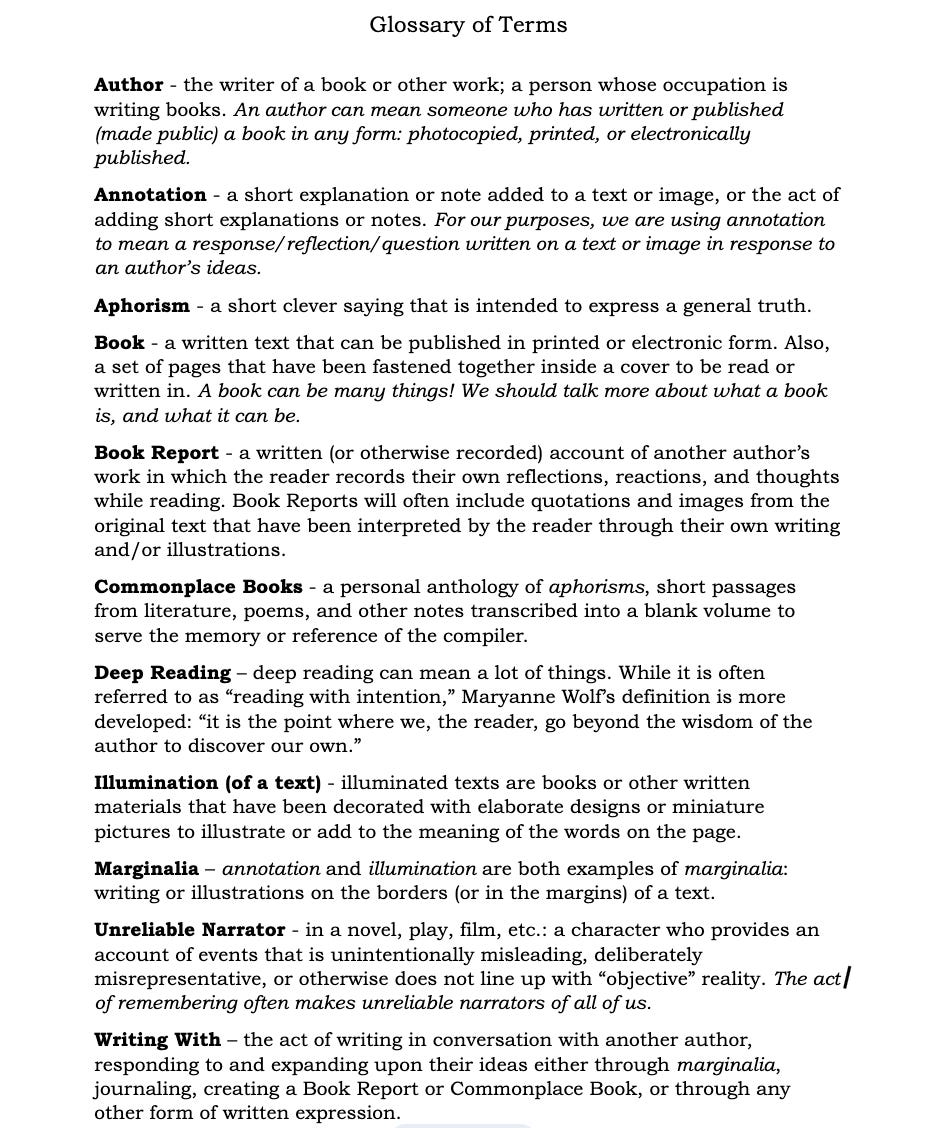
This was my first time collaborating formally with Rebecca. In addition to being a public librarian, she is also a scholar focused on “material transmission of knowledge and cultures, and print history”; so prepping for this workshop was basically a private education in the weirdo history of marginalia, illumination and annotated texts. Check out the glossary that Rebecca put together.
Like many of the events I’ve been producing lately, the event itself is almost incidental to the process of preparing for it, working closely with one or a few other people on an area of shared interest.
#Goals
Well, not goals exactly. More like some stuff we have been thinking about that we wanted to share:
This kind of reading and writing have been around for a long time. We are part of a lineage; we are not alone.
The reading and writing that we are talking about is simultaneously a way of both focusing and expanding our attention.
We don’t need a reason to work on whatever a reading dossier is. We can do so because we want to and because it’s fun. Those are reasons enough.
Run of Show
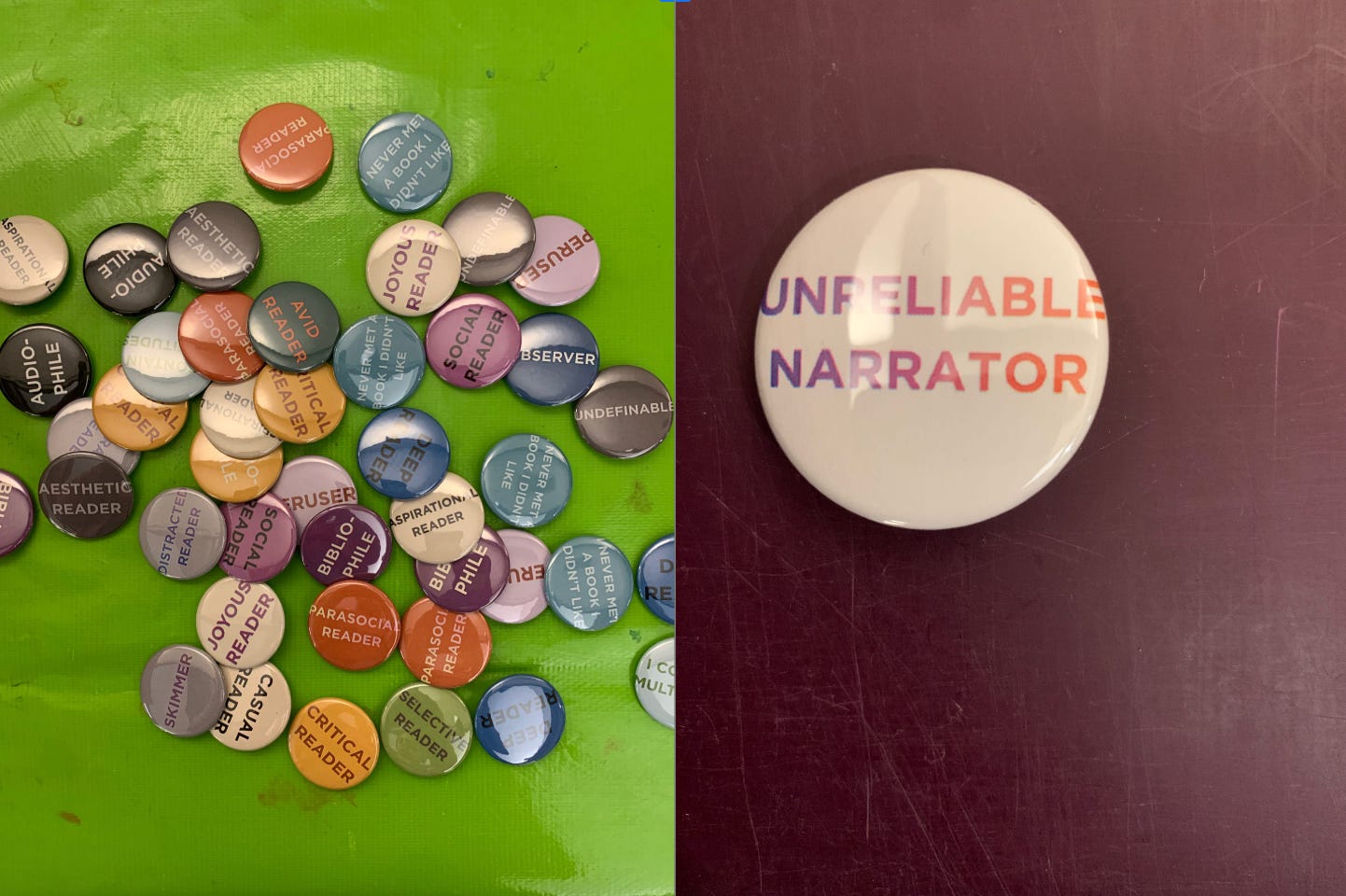
The workshop itself was as hands-on as we could make it. Rebecca made buttons — each person chose one and said a line or two about why. Ice breakers are annoying, but this one was surprisingly generative, way better than the typical “pick an animal/fruit/vegetable” prompts. When in doubt, make a button.
Marginalia Everywhere
We wanted participants to be aware that we were not so much creating something new as situating ourselves within a broader intellectual history of social writing. We shared some of our favorite examples of marginalia.
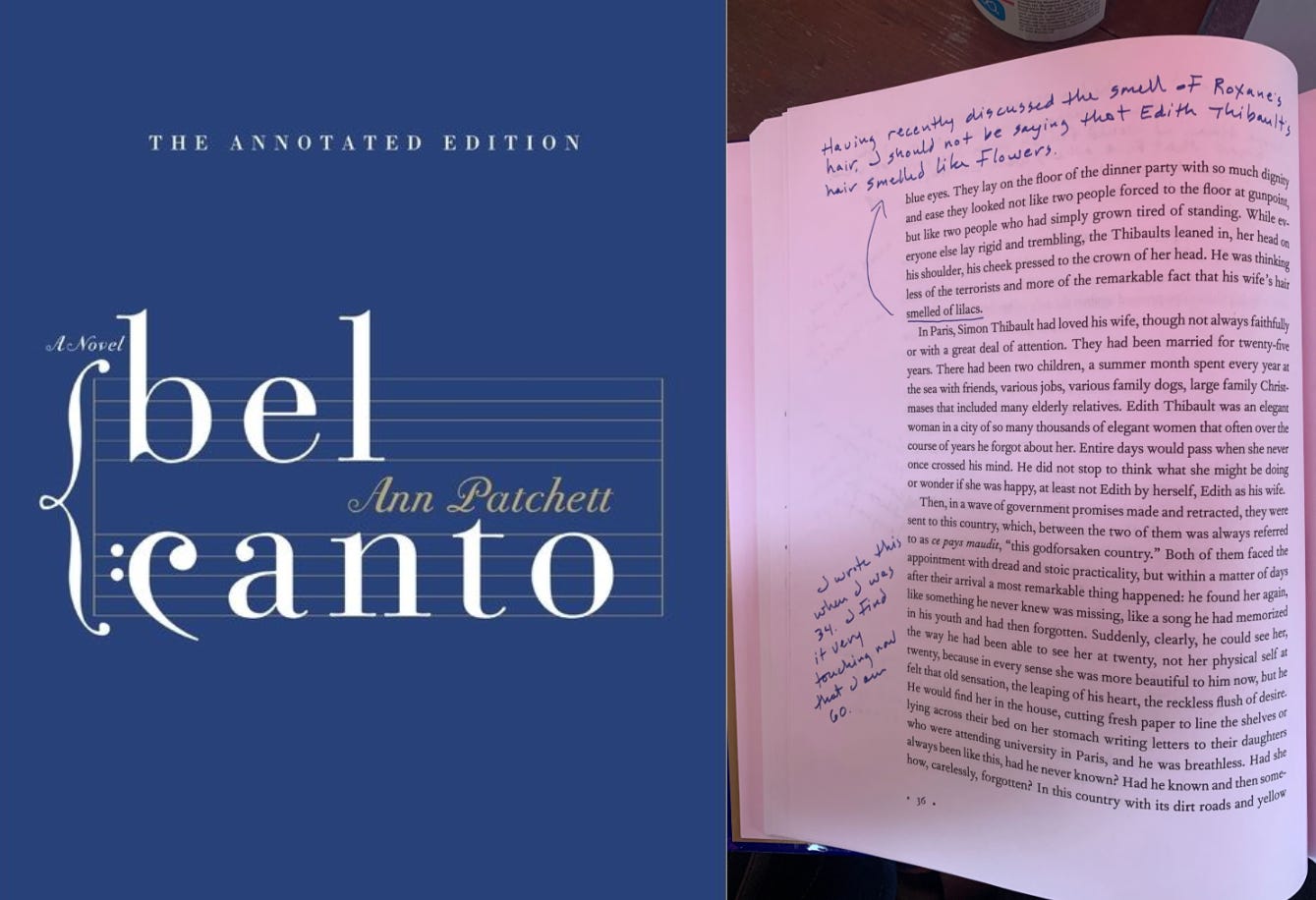
This annotated edition of Ann Patchett’s 2001 book Bel Canto was re-released in 2024 with notes and commentary by Patchett:
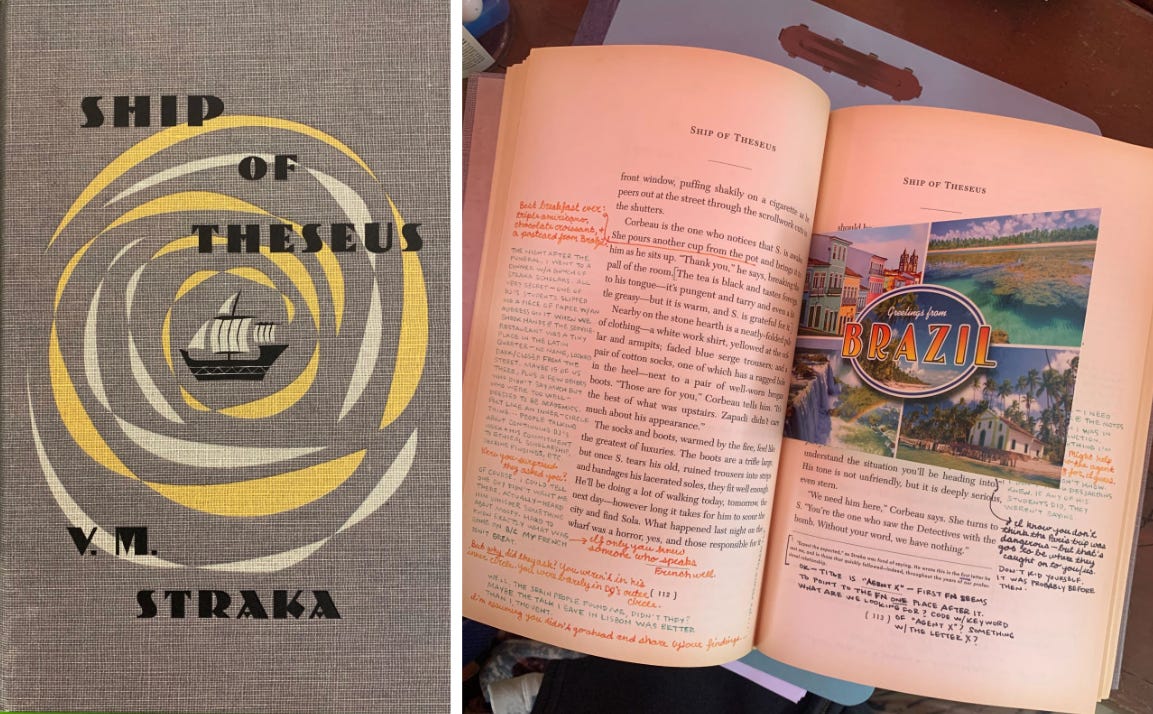
An example of not just marginalia but really stretching the form of the book is S., a novel within a novel by Doug Dorst and J. J. Abrams (yes, that J. J. Abrams). The novel appears as an old library book, Ship of Theseus, by a fictional author, V.M. Straka. The real narrative unfolds in the margins, where two readers leave notes for each other, creating a second, parallel story as they try to solve the mystery of Straka's identity.
The book is famous for its physical design, which includes handwritten notes, postcards, photos, and other ephemera tucked inside its pages. It’s the tactility and interactivity of this book experience that we were trying to recreate with our dossier activity.
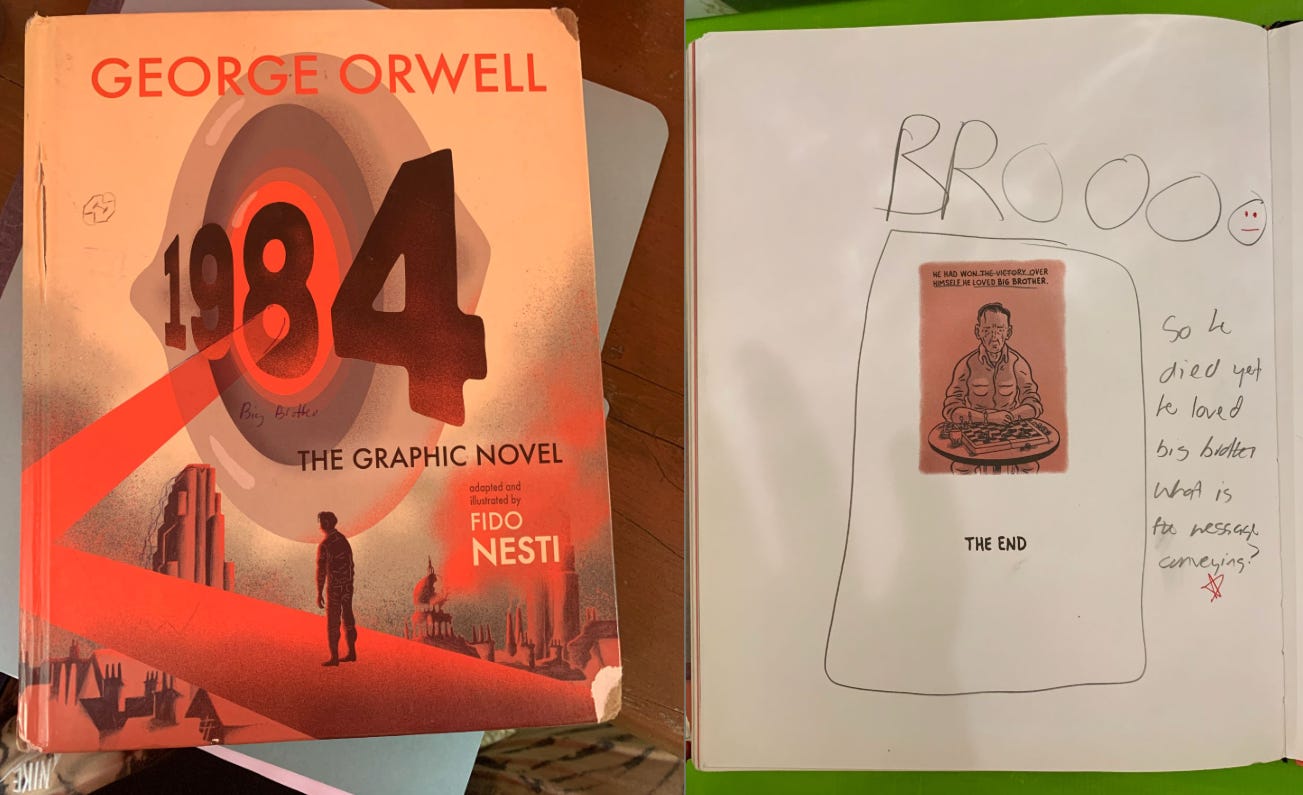
My most treasured example of marginalia is this graphic novel version of George Orwell’s 1984 that I found in a Little Free Library in Philly. The last time I read Orwell’s book was in high school and based on the notes, I presume this reader is in high school, too. I feel so much tenderness toward them.
Collating as Creation
Perhaps unsurprisingly, it took a minute for a crew of librarians to get on board with the idea of writing in books. I’ve also learned that a lot of people need permission (from themselves mostly) to write “for no reason” or to claim the mantle of “author,” even when they like writing, even when they’re good at it. I empathize with the discomfort. It took me 20 months from the time I first launched this Substack to write my first post. In the interest of being chill about the whole author thing, we tried a few things to warm people up:
We made an exquisite corpse about collective reading and writing.
We made yearbook pages that everyone could fill out anonymously.
It can be intimidating to create from scratch. But curating, collaging, collating are all creative acts and an easier entry point than trying to create “original” work. In making choices about what we want and didn’t want to include in our dossiers, we were discovering and practicing our unique perspective and taste.
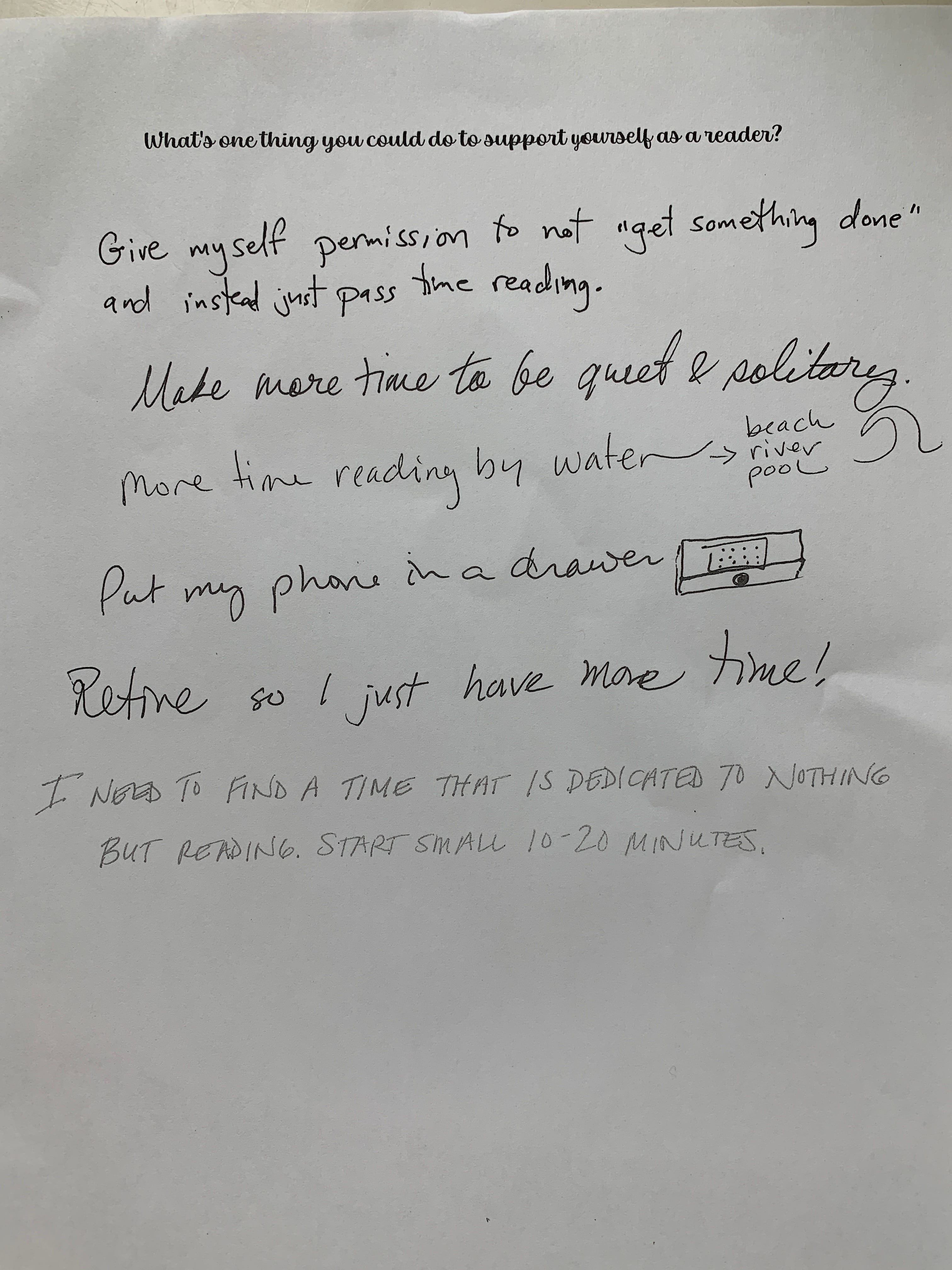
Parallel Play
Parents of toddlers will be familiar with the idea of parallel play, a phase of development where children play alongside each other with similar materials but without direct interaction. Compiling our dossiers was sort of like that.
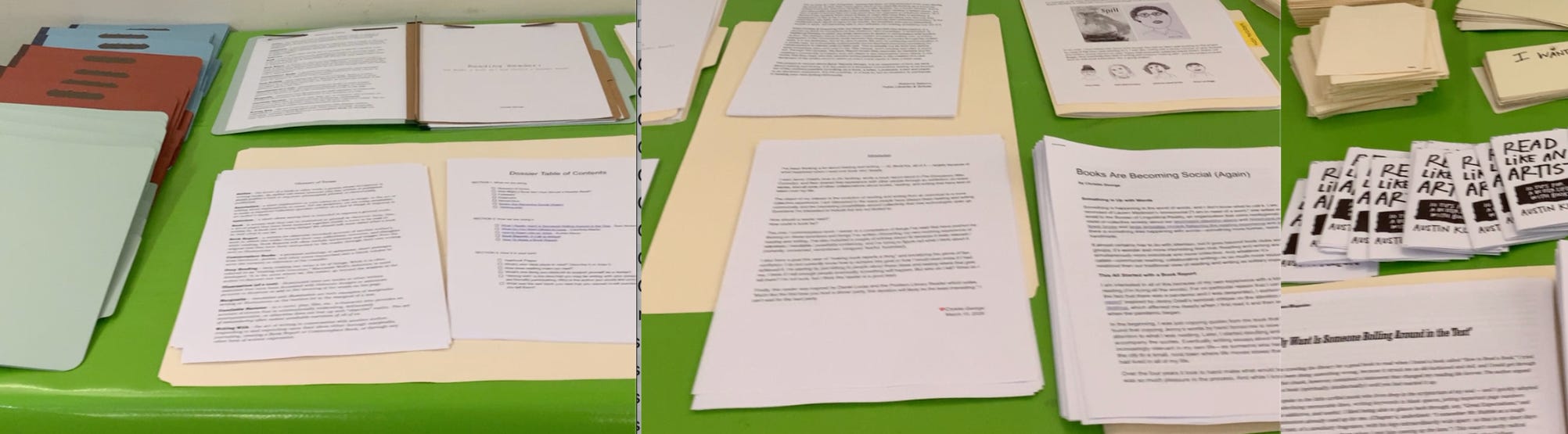
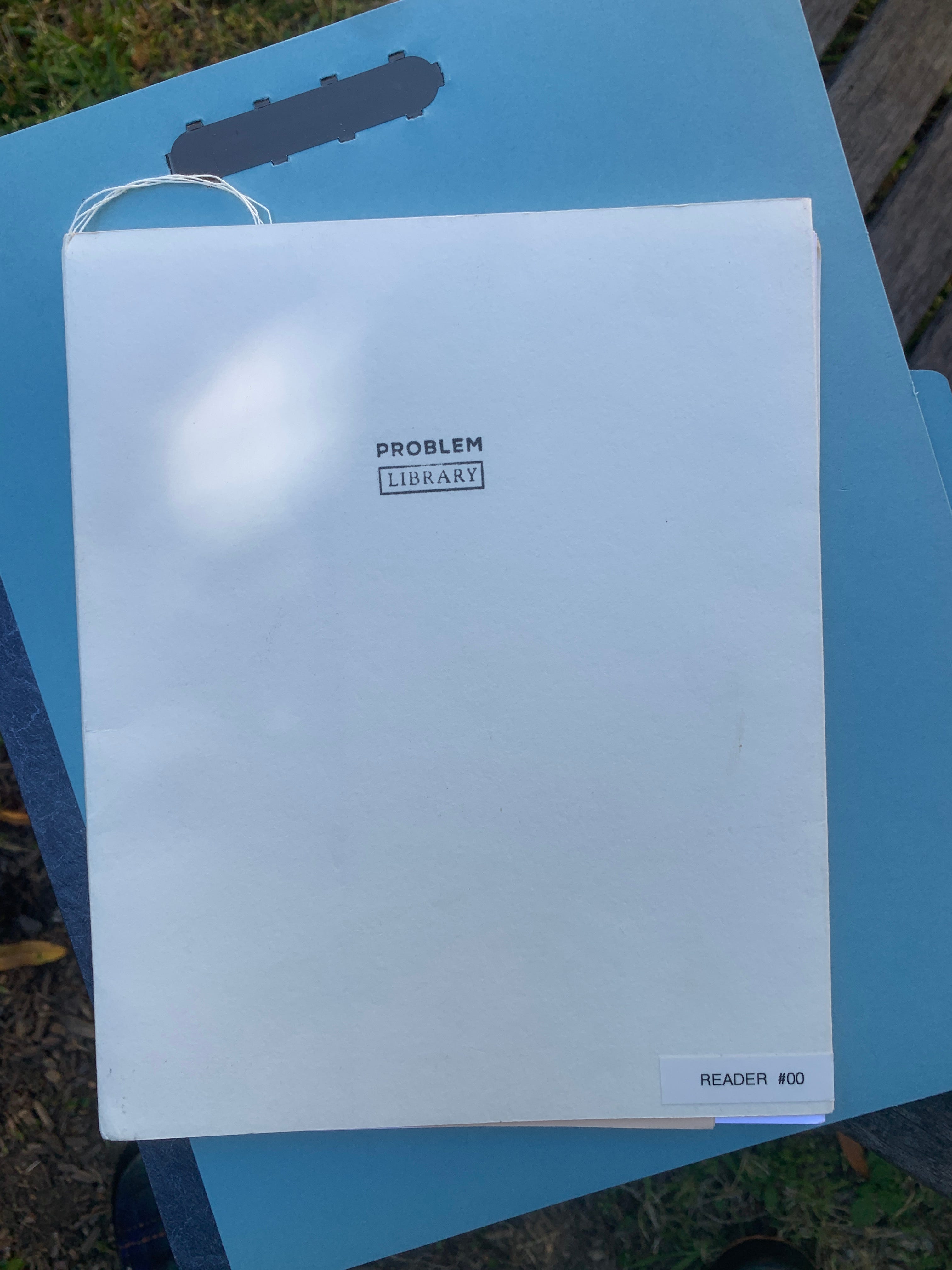
The dossiers were inspired by those photocopied course readers from college as well as a reader compiled by the creative and kind people at Problem Library. We laid out a table of articles and zines that participants could pick and choose from. It was reminiscent of “playing office” as a child. There was a somewhat inexplicable satisfaction in slipping a zine into a library pocket into a folder. Something like the IRL version of ASMR videos of papers in pockets (prepare to go down a rabbit hole or at least know that this specific rabbit hole exists).
Some other things - Rebecca is the consummate host, and this helped. The vibes were immaculate. There was a record player. There were snacks, including homemade bread and freshly brewed tea. It was intimate and so evidently filled with care.
If any of this sounds like something you want to try, you don’t need a workshop. Invite a friend over. Print out some things worth reading, make some notes directly on them. Talk to each other about what you did. Or just call me, and I’ll walk you through it. You don’t need a reason. Wanting to is reason enough.